Wilks Calculator
Calculate your Wilks score from your powerlifting total (squat + bench + deadlift) and bodyweight. The Wilks coefficient adjusts your total for bodyweight so lifters of different sizes can be compared.
Sex, Bodyweight & Units
Enter Your Competition Total (LB)
Combined best squat + bench press + deadlift from one competition or session
Your Wilks Score
What does this number mean?
Your Wilks score is your powerlifting total adjusted for bodyweight. It allows comparison between lifters of different body sizes. A heavier lifter typically has a higher raw total but a lower coefficient, while a lighter lifter has a higher coefficient. The score itself is not a rank or classification — it is a comparison metric. On the classic scale, scores of ~300, ~400, and ~500 are commonly referenced informal milestones in the powerlifting community, but no official ranking system exists for Wilks.
About the Wilks Formula
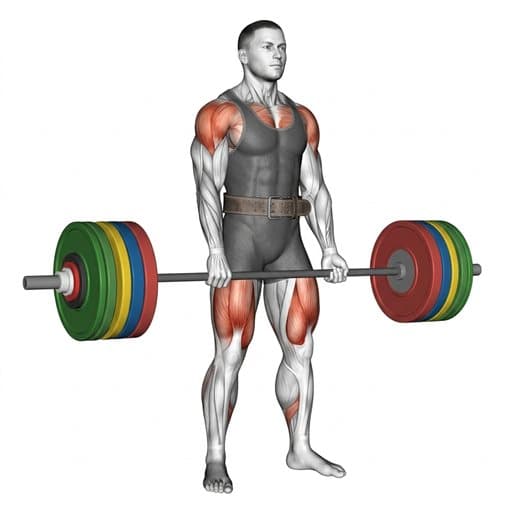
Created by Robert Wilks in the mid-1990s, the Wilks formula normalizes powerlifting totals (Squat + Bench Press + Deadlift) against bodyweight. By applying a 5th-degree polynomial curve, the formula allows lifters across lightweight, middleweight, and heavyweight divisions to be ranked on a single normalized scale.
Our calculator supports both the original Classic Wilks standard (K=500) and the updated 2020 revision (K=600), giving competitive and recreational lifters direct access to verified federation scoring.
How the Wilks Score Works
Formula details, version differences, and limitations.
1. How the Wilks Score Is Calculated
The Wilks coefficient is a bodyweight-adjustment factor for powerlifting. Your competition total (squat + bench press + deadlift, in kilograms) is multiplied by a coefficient derived from your bodyweight to produce a single score that can be compared across weight classes.
Where x is bodyweight in kilograms, K is the normalisation constant (500 for classic, 600 for 2020), and a–f are sex-specific polynomial coefficients fitted to competition data. The polynomial produces a smooth curve: lighter lifters receive a higher coefficient (each kilogram they lift is “worth more”), while heavier lifters receive a lower coefficient.
If the user enters weights in pounds, the calculator converts to kilograms internally (1 lb = 0.45359237 kg) before applying the formula. The Wilks score itself has no unit — it is the same number regardless of whether you typed in lb or kg.
2. Classic Wilks vs. 2020 Revision
Classic Wilks (~1994): Authored by Robert Wilks of Powerlifting Australia. Uses K = 500. This is the formula most lifters mean when they say “Wilks score.” It was fitted to competition data from the early 1990s and became the standard bodyweight-adjustment system across many powerlifting federations.
Wilks-2 / 2020 Revision: Published by Powerlifting Australia in March 2020 with refitted coefficients and K = 600. The revision aimed to correct imbalances at extreme bodyweight classes and better align male and female scoring. Because the normalisation constant changed from 500 to 600, 2020 scores run approximately 20% higher than classic scores for the same lifter and total.
Do not compare a classic Wilks score directly with a 2020 score. They are on different scales. A “400” classic is roughly a “480” on the 2020 scale.
3. Other Powerlifting Scoring Systems
Several alternative bodyweight-adjustment systems exist in powerlifting. This calculator implements only Wilks (classic and 2020). The following systems are not calculated here:
- DOTS — A fourth-degree polynomial system with separate male/female coefficients. Used by some federations as a Wilks alternative.
- IPF GL Points (Goodlift) — Adopted by the International Powerlifting Federation around 2019–2020 to replace Wilks. Uses a different mathematical model and has separate coefficients for classic (raw) and equipped lifting.
- Sinclair — Used in Olympic weightlifting, not powerlifting. Based on world records, not polynomial curve fitting.
Each system produces a different number for the same lifter. A DOTS score is not a Wilks score. Always check which scoring system your federation or competition uses.
4. Limitations
- Extreme bodyweights: The polynomial is fitted to approximately 40–210 kg. At the extremes the curve is least reliable and the score becomes noisier.
- Competition total, not gym lifts: Wilks is designed for a three-lift total achieved on the same platform on the same day. Combining personal bests from separate sessions inflates the score.
- No official ranking ladder: There is no officially published Wilks classification system (Beginner, Intermediate, Elite, etc.). The score is a comparison metric, not a grading system.
- Fitted to historical data: The classic coefficients were fitted to early-1990s competition results. Lifting standards have evolved since then, particularly in women’s and heavier weight categories.
- Not a measure of health or fitness: Wilks measures relative powerlifting strength. It does not indicate health status, injury risk, or general athleticism.
Frequently Asked Questions
What is a Wilks score?
A Wilks score is a bodyweight-adjusted number that normalises a powerlifting total (squat + bench press + deadlift) so lifters of different body sizes can be compared. Your total in kilograms is multiplied by a coefficient derived from a fifth-degree polynomial of your bodyweight. The result is a single number: a lighter lifter's coefficient is higher, a heavier lifter's is lower, so the scores land on a comparable scale.
What does the Wilks score number actually mean?
The number itself is not a rank, percentile, or classification — it is a comparison metric. A higher score means stronger relative to bodyweight. On the classic (K = 500) scale, scores of approximately 300, 400, and 500 are commonly referenced informal milestones in the powerlifting community, but there is no officially published ranking ladder or tier system for Wilks scores.
Is the Wilks score still used in competition?
It depends on the federation. The International Powerlifting Federation (IPF) replaced Wilks with IPF GL Points (Goodlift) around 2019–2020. However, many other federations and platforms continue to use either classic Wilks or the 2020 revision. World Powerlifting, for example, uses Wilks 2020. Always check the scoring system specified by your specific federation or competition.
What is the difference between Classic Wilks and Wilks 2020?
Both use the same polynomial structure (a fifth-degree polynomial of bodyweight) but with different coefficients. Classic Wilks uses a normalisation constant of 500; Wilks 2020 uses 600. This means a 2020 score is roughly 20% higher than a classic score for the same lifter. The 2020 revision also refitted the polynomial to correct imbalances at extreme bodyweight classes. The two scores are not on the same scale and should not be compared directly.
Can I use Wilks for a single lift instead of a total?
Technically, the formula works on any weight value — you can multiply a single-lift result by the coefficient. However, Wilks was designed for the three-lift powerlifting total. Using it for a single lift is unconventional and the resulting number is not directly comparable to scores calculated from totals. If you do this, be explicit that the score is based on a single lift, not a competition total.
How accurate is the Wilks formula at extreme bodyweights?
The polynomial was fitted to competition data covering approximately 40–210 kg of bodyweight. At the extremes — very light juniors or super-heavyweights — the curve is least reliable and the score gets noisier. This calculator clamps bodyweights outside the fitted range to the nearest boundary and discloses when this happens. For lifters well outside the range, the score should be treated as a rough approximation.
Disclaimer
This calculator implements the Wilks coefficient formula for informational and training-planning purposes. The result is a bodyweight-adjusted comparison metric — not a competition ranking, percentile, or measure of health. Formula coefficients are sourced from published references. Always verify your score against the scoring system used by your specific federation or competition.