IPF-GL, Wilks, and DOTS | Powerlifting Points Calculator
Calculate IPF GL Points, DOTS, and Wilks from your powerlifting total (squat + bench + deadlift) and bodyweight. Three scoring systems, one set of inputs.
Sex, Equipment, Bodyweight & Units
Squat + Bench + Deadlift (LB)
Combined best squat + bench press + deadlift from one competition or session
IPF GL Points
Goodlift — May 2020 — Classic
DOTS
Tim Konertz — 2019 — K=500
Wilks
Classic — Robert Wilks (~1994) — K=500
Why do these numbers differ?
IPF GL Points, DOTS, and Wilks use different mathematical models (exponential vs. 4th-degree polynomial vs. 5th-degree polynomial) with different coefficients, fitted to different datasets. Their numerical scales are also different: IPF GL Points typically range from roughly 60 to 125, while DOTS and Wilks typically range from roughly 200 to 600. A score from one system should never be compared directly with a score from another system.
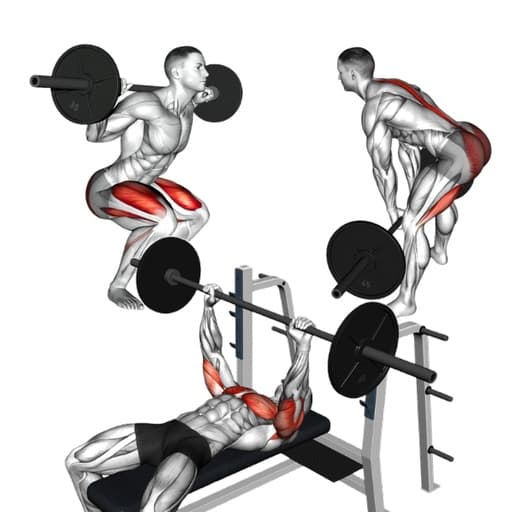
About Powerlifting Points Systems
In competitive powerlifting, lifters compete across weight classes based on their three-lift total (Squat + Bench Press + Deadlift). To determine best overall lifters across different bodyweight categories, federations use mathematical formulas that adjust for the non-linear relationship between body mass and lifting performance.
This calculator provides instantaneous side-by-side comparison across the three most prominent standards: IPF GL Points (official International Powerlifting Federation standard using exponential von Bertalanffy modeling), DOTS (widely utilized by USPA, WRPF, and many independent federations using 4th-degree polynomials), and Classic Wilks (the foundational 5th-degree polynomial benchmark).
Scoring Systems & Methodology
IPF GL Points (Goodlift)
IPF GL Points are the official scoring system of the International Powerlifting Federation, adopted in May 2020. The formula uses an exponential model (von Bertalanffy function) rather than a polynomial.
Points = Totalkg × 100 / (A − B × e−C × BW)
where A, B, C are constants that differ by sex and equipment category (Classic/Raw or Equipped), and e is Euler's number.
- •Used by: IPF and all IPF affiliates (including USAPL)
- •Scale: Typically ~60–125. A score near 100 approximates world-record level for the reference lifter.
- •Equipment: Separate coefficient sets for Classic (Raw) and Equipped lifting. Raw and equipped GL scores are not directly comparable.
- •Source: IPF_GL_Coefficients-2020-v.0.6.5 (powerlifting.sport)
DOTS
DOTS (Dynamic Objective Team Scoring) is a bodyweight-adjusted coefficient developed by Tim Konertz in 2019. It uses a 4th-degree polynomial fitted to competitive powerlifting data.
Score = Totalkg × 500 / P(x)
P(x) = a + bx + cx² + dx³ + ex⁴
- •Used by: USPA, WRPF, and many independent federations outside the IPF
- •Scale: Typically ~200–600 (different scale from IPF GL)
- •Equipment: No equipment distinction. Same coefficients for raw and equipped.
- •Detailed page: DOTS Calculator
Wilks (Classic)
The Wilks coefficient, created by Robert Wilks (Powerlifting Australia) around 1994, is the longest-running bodyweight-normalisation system in powerlifting. It uses a 5th-degree polynomial with a normalisation constant of 500.
Score = Totalkg × 500 / P(x)
P(x) = a + bx + cx² + dx³ + ex⁴ + fx⁵
- •Used by: Historically the standard for nearly all federations. Still widely used outside the IPF.
- •Scale: Typically ~200–600 (similar scale to DOTS, different from IPF GL)
- •Version note: This calculator uses the Classic formula (K=500). A 2020 revision (K=600) also exists with higher numerical scores.
- •Detailed page: Wilks Calculator (Classic & 2020)
Why Scores Differ Between Systems
The three scoring systems produce different numerical results because they use fundamentally different mathematical models:
| System | Model | K | Typical Range |
|---|---|---|---|
| IPF GL | Exponential | 100 | 60–125 |
| DOTS | 4th-degree polynomial | 500 | 200–600 |
| Wilks | 5th-degree polynomial | 500 | 200–600 |
Because the models, coefficients, and normalisation constants differ, the numerical outputs are on entirely different scales. A score from one system cannot be meaningfully compared to a score from another.
Limitations
All three scoring systems share common limitations:
- •They adjust for bodyweight only — not for age, training experience, drug-testing status, or technique.
- •The formulas are fitted to competitive powerlifting data within specific bodyweight ranges. Outside those ranges, results become unreliable.
- •None of these scores predict competition placement, measure health, or indicate overall athletic ability.
- •For the most meaningful result, use a three-lift total from a single competition or session rather than personal bests from separate occasions.
Frequently Asked Questions
What is the difference between IPF GL, DOTS, and Wilks?+
They are three independent bodyweight-adjustment formulas for powerlifting totals. IPF GL Points use an exponential model with four coefficient sets (sex × equipment category). DOTS uses a 4th-degree polynomial with sex-specific coefficients. Wilks uses a 5th-degree polynomial with sex-specific coefficients. Each was developed by different authors, fitted to different datasets, and produces scores on a different numerical scale.
Can I compare scores from different systems?+
No. The three systems produce numbers on different scales — IPF GL scores typically range from roughly 60 to 125, while DOTS and Wilks scores typically range from roughly 200 to 600. A 90 IPF GL score does not correspond to a 90 DOTS score. Only compare scores calculated with the same formula.
Which scoring system does the IPF use officially?+
The International Powerlifting Federation uses IPF GL Points (Goodlift) for all official rankings, best-lifter awards, and qualification standards since May 2020. IPF GL replaced the older IPF Points system. DOTS and Wilks are used by other federations such as USAPL, USPA, and various national organizations.
Do DOTS and Wilks account for equipment (raw vs. equipped)?+
No. DOTS and Wilks use the same coefficient sets regardless of whether the lifter competes raw or equipped. Only IPF GL Points has separate coefficients for Classic (Raw) and Equipped lifting. This means changing the equipment toggle on this calculator only affects your IPF GL score.
Why is my IPF GL score a completely different number from my DOTS or Wilks score?+
IPF GL uses a normalisation constant of 100 and an exponential model, while DOTS and Wilks use a normalisation constant of 500 and polynomial models. This puts them on different numerical scales. A 90 GL score and a 400 DOTS score might belong to the same lifter — the numbers are not meant to be compared to each other.
Should I use my competition total or training bests?+
For the most meaningful and comparable score, use a three-lift total from a single competition or training session where all three lifts (squat, bench, deadlift) were performed on the same day. Combining personal bests from separate sessions inflates the total and produces a score that may not reflect your actual competition performance.
Disclaimer
This calculator implements three independent bodyweight-adjusted scoring formulas for informational and training-planning purposes. IPF GL Points use the official May 2020 coefficients. DOTS uses the Tim Konertz (2019) coefficients. Wilks uses the Classic (~1994) coefficients with K = 500. These scores are comparison metrics — not competition rankings, percentiles, or measures of health. Always verify your score against the system used by your specific federation or competition.