Powerlifting total standards by weight, age and sex
The typical (median) powerlifting total of men in the 80 to under 90 kg band was 545 kg (1202 lb). For women in the 60 to under 70 kg band, it was 305 kg (672 lb). The typical (median) powerlifting total of men in the 176 to under 198 lb band was 1202 lb (545 kg). For women in the 132 to under 154 lb band, it was 672 lb (305 kg). About half of each group made a lower total, so these are middle values, not targets. Each group is the biggest bodyweight band of its sex among adult Raw competitors, using each lifter's best total on record in OpenPowerlifting results (release of 14 November 2026).
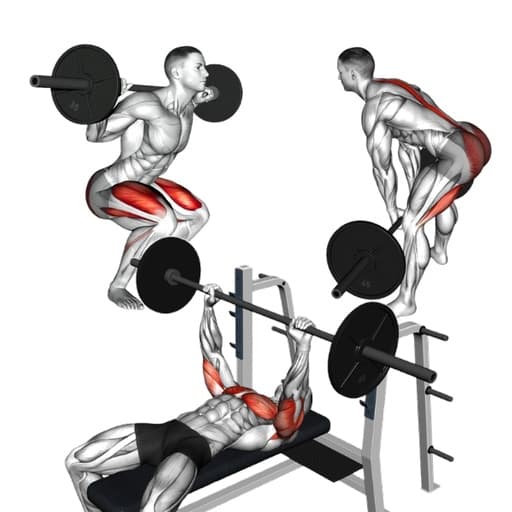
Check your total
Adults, 18 and overYour result appears here
Fill in the form and press “See where I rank”. You get:
- Your place in the group
- A chart of the group
- The total each level takes
The numbers come from the OpenPowerlifting data, release 14 November 2026. How it was built.
Total by bodyweight
Each row is a bodyweight band and each column is a percentile. Find your bodyweight, then read along the row. Every percentile is a total from a real lifter in that band (counted to the nearest 2.5 kg), so there is nothing to calculate. For example, take men who weigh 80 to under 90 kg176 to under 198 lb. Their 75th percentile is 602.5 kg1328 lb, so no more than 25 of every 100 of them made a higher total. The 50th percentile is also called the median. Every total is shown in kilograms and pounds, and the unit switch decides which one is printed large. These tables count the Raw category only.
- Men
- Lowest median400 kg 882 lbin the under 60 kg bandin the under 132 lb bandHighest median697.5 kg 1538 lbin the 150 kg and over bandin the 331 lb and over band
- Women
- Lowest median240 kg 529 lbin the under 50 kg bandin the under 110 lb bandHighest median380 kg 838 lbin the 120 kg and over bandin the 265 lb and over band
| Bodyweight | Lifters | 5th | 10th | 25th | 50thMedian | 75th | 90th | 95th | 99th |
|---|---|---|---|---|---|---|---|---|---|
| under 60 kg under 132 lb | 6,430 | 255 kg 562 lb | 287.5 kg 634 lb | 342.5 kg 755 lb | 400 kg 882 lb | 455 kg 1003 lb | 502.5 kg 1108 lb | 530 kg 1168 lb | 582.5 kg 1284 lb |
| 60 to under 70 kg 132 to under 154 lb | 19,675 | 307.5 kg 678 lb | 345 kg 761 lb | 397.5 kg 876 lb | 452.5 kg 998 lb | 505 kg 1113 lb | 552.5 kg 1218 lb | 582.5 kg 1284 lb | 637.5 kg 1405 lb |
| 70 to under 80 kg 154 to under 176 lb | 47,867 | 357.5 kg 788 lb | 392.5 kg 865 lb | 445 kg 981 lb | 500 kg 1102 lb | 550 kg 1213 lb | 600 kg 1323 lb | 630 kg 1389 lb | 690 kg 1521 lb |
| 80 to under 90 kg 176 to under 198 lb | 72,342 | 400 kg 882 lb | 435 kg 959 lb | 487.5 kg 1075 lb | 545 kg 1202 lb | 602.5 kg 1328 lb | 657.5 kg 1450 lb | 690 kg 1521 lb | 757.5 kg 1670 lb |
| 90 to under 100 kg 198 to under 220 lb | 53,942 | 420 kg 926 lb | 460 kg 1014 lb | 520 kg 1146 lb | 580 kg 1279 lb | 642.5 kg 1416 lb | 700 kg 1543 lb | 735 kg 1620 lb | 802.5 kg 1769 lb |
| 100 to under 110 kg 220 to under 243 lb | 36,063 | 440 kg 970 lb | 480 kg 1058 lb | 545 kg 1202 lb | 612.5 kg 1350 lb | 680 kg 1499 lb | 740 kg 1631 lb | 777.5 kg 1714 lb | 847.5 kg 1868 lb |
| 110 to under 120 kg 243 to under 265 lb | 17,326 | 447.5 kg 987 lb | 490 kg 1080 lb | 560 kg 1235 lb | 635 kg 1400 lb | 707.5 kg 1560 lb | 772.5 kg 1703 lb | 810 kg 1786 lb | 882.5 kg 1946 lb |
| 120 to under 130 kg 265 to under 287 lb | 10,653 | 455 kg 1003 lb | 497.5 kg 1097 lb | 570 kg 1257 lb | 650 kg 1433 lb | 725 kg 1598 lb | 792.5 kg 1747 lb | 835 kg 1841 lb | 915 kg 2017 lb |
| 130 to under 140 kg 287 to under 309 lb | 5,652 | 457.5 kg 1009 lb | 502.5 kg 1108 lb | 580 kg 1279 lb | 665 kg 1466 lb | 747.5 kg 1648 lb | 820 kg 1808 lb | 862.5 kg 1901 lb | 935 kg 2061 lb |
| 140 to under 150 kg 309 to under 331 lb | 2,858 | 445 kg 981 lb | 497.5 kg 1097 lb | 585 kg 1290 lb | 672.5 kg 1483 lb | 765 kg 1687 lb | 835 kg 1841 lb | 880 kg 1940 lb | 962.5 kg 2122 lb |
| 150 kg and over 331 lb and over | 2,656 | 455 kg 1003 lb | 512.5 kg 1130 lb | 597.5 kg 1317 lb | 697.5 kg 1538 lb | 792.5 kg 1747 lb | 880 kg 1940 lb | 927.5 kg 2045 lb | 1012.5 kg 2232 lb |
| Bodyweight | Lifters | 5th | 10th | 25th | 50thMedian | 75th | 90th | 95th | 99th |
|---|---|---|---|---|---|---|---|---|---|
| under 50 kg under 110 lb | 5,168 | 155 kg 342 lb | 172.5 kg 380 lb | 205 kg 452 lb | 240 kg 529 lb | 277.5 kg 612 lb | 312.5 kg 689 lb | 332.5 kg 733 lb | 375 kg 827 lb |
| 50 to under 60 kg 110 to under 132 lb | 28,157 | 187.5 kg 413 lb | 207.5 kg 457 lb | 240 kg 529 lb | 277.5 kg 612 lb | 317.5 kg 700 lb | 357.5 kg 788 lb | 380 kg 838 lb | 430 kg 948 lb |
| 60 to under 70 kg 132 to under 154 lb | 35,992 | 210 kg 463 lb | 230 kg 507 lb | 265 kg 584 lb | 305 kg 672 lb | 350 kg 772 lb | 390 kg 860 lb | 417.5 kg 920 lb | 472.5 kg 1042 lb |
| 70 to under 80 kg 154 to under 176 lb | 25,062 | 220 kg 485 lb | 242.5 kg 535 lb | 280 kg 617 lb | 322.5 kg 711 lb | 367.5 kg 810 lb | 415 kg 915 lb | 445 kg 981 lb | 502.5 kg 1108 lb |
| 80 to under 90 kg 176 to under 198 lb | 15,518 | 227.5 kg 502 lb | 250 kg 551 lb | 290 kg 639 lb | 335 kg 739 lb | 385 kg 849 lb | 432.5 kg 953 lb | 462.5 kg 1020 lb | 530 kg 1168 lb |
| 90 to under 100 kg 198 to under 220 lb | 6,964 | 227.5 kg 502 lb | 252.5 kg 557 lb | 295 kg 650 lb | 342.5 kg 755 lb | 392.5 kg 865 lb | 440 kg 970 lb | 470 kg 1036 lb | 535 kg 1179 lb |
| 100 to under 110 kg 220 to under 243 lb | 4,248 | 237.5 kg 524 lb | 262.5 kg 579 lb | 302.5 kg 667 lb | 352.5 kg 777 lb | 405 kg 893 lb | 457.5 kg 1009 lb | 490 kg 1080 lb | 545 kg 1202 lb |
| 110 to under 120 kg 243 to under 265 lb | 2,473 | 242.5 kg 535 lb | 265 kg 584 lb | 310 kg 683 lb | 362.5 kg 799 lb | 420 kg 926 lb | 472.5 kg 1042 lb | 505 kg 1113 lb | 580 kg 1279 lb |
| 120 kg and over 265 lb and over | 2,153 | 245 kg 540 lb | 272.5 kg 601 lb | 322.5 kg 711 lb | 380 kg 838 lb | 440 kg 970 lb | 495 kg 1091 lb | 535 kg 1179 lb | 620 kg 1367 lb |
Total by age
The same lifters, this time sorted by age. An age band mixes light and heavy lifters, so these rows show how totals shift with age, and they are a poor guide to your own place. For that, use the checker above, which looks at your age and bodyweight together.
- Men
- Lowest median347.5 kg 766 lbat ages 70 and overat ages 70 and overHighest median585 kg 1290 lbat ages 30 to 34at ages 30 to 34
- Women
- Lowest median202.5 kg 446 lbat ages 70 and overat ages 70 and overHighest median320 kg 705 lbat ages 25 to 29at ages 25 to 29
| Age | Lifters | 5th | 10th | 25th | 50thMedian | 75th | 90th | 95th | 99th |
|---|---|---|---|---|---|---|---|---|---|
| 18 to 24 | 107,035 | 375 kg 827 lb | 412.5 kg 909 lb | 475 kg 1047 lb | 542.5 kg 1196 lb | 612.5 kg 1350 lb | 680 kg 1499 lb | 722.5 kg 1593 lb | 805 kg 1775 lb |
| 25 to 29 | 52,028 | 410 kg 904 lb | 450 kg 992 lb | 510 kg 1124 lb | 580 kg 1279 lb | 657.5 kg 1450 lb | 730 kg 1609 lb | 777.5 kg 1714 lb | 870 kg 1918 lb |
| 30 to 34 | 31,867 | 407.5 kg 898 lb | 450 kg 992 lb | 512.5 kg 1130 lb | 585 kg 1290 lb | 667.5 kg 1472 lb | 745 kg 1642 lb | 790 kg 1742 lb | 887.5 kg 1957 lb |
| 35 to 39 | 17,350 | 400 kg 882 lb | 437.5 kg 965 lb | 500 kg 1102 lb | 577.5 kg 1273 lb | 657.5 kg 1450 lb | 735 kg 1620 lb | 785 kg 1731 lb | 880 kg 1940 lb |
| 40 to 44 | 12,154 | 380 kg 838 lb | 420 kg 926 lb | 482.5 kg 1064 lb | 557.5 kg 1229 lb | 635 kg 1400 lb | 705 kg 1554 lb | 750 kg 1653 lb | 840 kg 1852 lb |
| 45 to 49 | 7,575 | 362.5 kg 799 lb | 400 kg 882 lb | 465 kg 1025 lb | 540 kg 1190 lb | 612.5 kg 1350 lb | 680 kg 1499 lb | 720 kg 1587 lb | 810 kg 1786 lb |
| 50 to 54 | 5,917 | 347.5 kg 766 lb | 380 kg 838 lb | 440 kg 970 lb | 510 kg 1124 lb | 582.5 kg 1284 lb | 650 kg 1433 lb | 687.5 kg 1516 lb | 757.5 kg 1670 lb |
| 55 to 59 | 3,867 | 322.5 kg 711 lb | 355 kg 783 lb | 415 kg 915 lb | 480 kg 1058 lb | 550 kg 1213 lb | 610 kg 1345 lb | 650 kg 1433 lb | 725 kg 1598 lb |
| 60 to 64 | 3,008 | 285 kg 628 lb | 320 kg 705 lb | 375 kg 827 lb | 447.5 kg 987 lb | 512.5 kg 1130 lb | 572.5 kg 1262 lb | 602.5 kg 1328 lb | 665 kg 1466 lb |
| 65 to 69 | 1,656 | 260 kg 573 lb | 290 kg 639 lb | 342.5 kg 755 lb | 402.5 kg 887 lb | 467.5 kg 1031 lb | 520 kg 1146 lb | 552.5 kg 1218 lb | 615 kg 1356 lb |
| 70 and over | 1,458 | 210 kg 463 lb | 235 kg 518 lb | 285 kg 628 lb | 347.5 kg 766 lb | 402.5 kg 887 lb | 462.5 kg 1020 lb | 495 kg 1091 lb | 540 kg 1190 lb |
| Age | Lifters | 5th | 10th | 25th | 50thMedian | 75th | 90th | 95th | 99th |
|---|---|---|---|---|---|---|---|---|---|
| 18 to 24 | 38,747 | 200 kg 441 lb | 225 kg 496 lb | 262.5 kg 579 lb | 307.5 kg 678 lb | 355 kg 783 lb | 400 kg 882 lb | 430 kg 948 lb | 487.5 kg 1075 lb |
| 25 to 29 | 25,426 | 217.5 kg 480 lb | 240 kg 529 lb | 275 kg 606 lb | 320 kg 705 lb | 370 kg 816 lb | 420 kg 926 lb | 450 kg 992 lb | 520 kg 1146 lb |
| 30 to 34 | 17,742 | 212.5 kg 468 lb | 235 kg 518 lb | 272.5 kg 601 lb | 317.5 kg 700 lb | 370 kg 816 lb | 420 kg 926 lb | 455 kg 1003 lb | 527.5 kg 1163 lb |
| 35 to 39 | 11,431 | 212.5 kg 468 lb | 232.5 kg 513 lb | 270 kg 595 lb | 315 kg 694 lb | 362.5 kg 799 lb | 415 kg 915 lb | 452.5 kg 998 lb | 520 kg 1146 lb |
| 40 to 44 | 8,400 | 205 kg 452 lb | 225 kg 496 lb | 260 kg 573 lb | 305 kg 672 lb | 352.5 kg 777 lb | 402.5 kg 887 lb | 435 kg 959 lb | 507.5 kg 1119 lb |
| 45 to 49 | 5,433 | 195 kg 430 lb | 212.5 kg 468 lb | 247.5 kg 546 lb | 290 kg 639 lb | 337.5 kg 744 lb | 387.5 kg 854 lb | 420 kg 926 lb | 487.5 kg 1075 lb |
| 50 to 54 | 3,724 | 185 kg 408 lb | 205 kg 452 lb | 237.5 kg 524 lb | 275 kg 606 lb | 322.5 kg 711 lb | 370 kg 816 lb | 400 kg 882 lb | 465 kg 1025 lb |
| 55 to 59 | 2,143 | 170 kg 375 lb | 190 kg 419 lb | 222.5 kg 491 lb | 260 kg 573 lb | 305 kg 672 lb | 350 kg 772 lb | 377.5 kg 832 lb | 455 kg 1003 lb |
| 60 to 64 | 1,440 | 152.5 kg 336 lb | 170 kg 375 lb | 205 kg 452 lb | 240 kg 529 lb | 282.5 kg 623 lb | 322.5 kg 711 lb | 347.5 kg 766 lb | 397.5 kg 876 lb |
| 65 to 69 | 759 | 147.5 kg 325 lb | 162.5 kg 358 lb | 192.5 kg 424 lb | 227.5 kg 502 lb | 267.5 kg 590 lb | 305 kg 672 lb | 330 kg 728 lb | not shown: the group is too small for this percentile |
| 70 and over | 461 | 127.5 kg 281 lb | 140 kg 309 lb | 165 kg 364 lb | 202.5 kg 446 lb | 235 kg 518 lb | 270 kg 595 lb | 295 kg 650 lb | not shown: the group is too small for this percentile |
Where round totals land
These tables show where six round totals would rank in each bodyweight band, counting adults of every age. Each figure answers one question: out of 100 lifters in this band, how many made a lower total than the one at the top of the column? A lifter on exactly that total counts as half.
The columns are round totals in kilograms, 300 to 800 kg. Switch to pounds and they change to 600 to 1600 lb.The columns are round totals in pounds, 600 to 1600 lb. Switch to kilograms and they change to 300 to 800 kg. We picked these totals ourselves, so they are not a statistic. The kilogram list goes up in steps of 100 kg and the pound list in steps of 200 lb. Neither list is the other one converted.
Example: 600 kg is about 1323 lb. Among men in the 80 to under 90 kg band, about 74 in 100 made a lower total than that.Example: 1200 lb is 544.3 kg. Among men in the 176 to under 198 lb band, about 50 in 100 made a lower total than that.
Our counts use steps of 2.5 kg (about 5.5 lb). A total given in pounds is converted to kilograms and moved to the nearest step. The six kilogram totals already sit on a step.
| Bodyweight | Lifters | 600 lb272.16 kg | 800 lb362.87 kg | 1000 lb453.59 kg | 1200 lb544.31 kg | 1400 lb635.03 kg | 1600 lb725.75 kg | 300 kg661 lb | 400 kg882 lb | 500 kg1102 lb | 600 kg1323 lb | 700 kg1543 lb | 800 kg1764 lb |
|---|---|---|---|---|---|---|---|---|---|---|---|---|---|
| under 60 kg under 132 lb | 6,430 | 7 | 33 | 74 | over 95 | over 99 | over 99 | 12 | 50 | 90 | over 99 | over 99 | over 99 |
| 60 to under 70 kg 132 to under 154 lb | 19,675 | under 5 | 14 | 50 | 89 | over 95 | over 99 | under 5 | 26 | 73 | over 95 | over 99 | over 99 |
| 70 to under 80 kg 154 to under 176 lb | 47,867 | under 5 | 6 | 28 | 72 | over 95 | over 99 | under 5 | 11 | 51 | 90 | over 99 | over 99 |
| 80 to under 90 kg 176 to under 198 lb | 72,342 | under 5 | under 5 | 14 | 50 | 85 | over 95 | under 5 | 5 | 30 | 74 | over 95 | over 99 |
| 90 to under 100 kg 198 to under 220 lb | 53,942 | under 5 | under 5 | 9 | 35 | 72 | 94 | under 5 | under 5 | 19 | 58 | 90 | over 95 |
| 100 to under 110 kg 220 to under 243 lb | 36,063 | under 5 | under 5 | 6 | 25 | 59 | 87 | under 5 | under 5 | 14 | 45 | 81 | over 95 |
| 110 to under 120 kg 243 to under 265 lb | 17,326 | under 5 | under 5 | 5 | 21 | 50 | 80 | under 5 | under 5 | 11 | 38 | 73 | 94 |
| 120 to under 130 kg 265 to under 287 lb | 10,653 | under 5 | under 5 | under 5 | 19 | 45 | 75 | under 5 | under 5 | 10 | 33 | 68 | 91 |
| 130 to under 140 kg 287 to under 309 lb | 5,652 | under 5 | under 5 | under 5 | 17 | 40 | 69 | under 5 | under 5 | 10 | 30 | 61 | 87 |
| 140 to under 150 kg 309 to under 331 lb | 2,858 | under 5 | under 5 | 5 | 17 | 39 | 65 | under 5 | under 5 | 10 | 29 | 58 | 84 |
| 150 kg and over 331 lb and over | 2,656 | under 5 | under 5 | under 5 | 15 | 34 | 58 | under 5 | under 5 | 9 | 26 | 51 | 77 |
| Bodyweight | Lifters | 600 lb272.16 kg | 800 lb362.87 kg | 1000 lb453.59 kg | 1200 lb544.31 kg | 1400 lb635.03 kg | 1600 lb725.75 kg | 300 kg661 lb | 400 kg882 lb | 500 kg1102 lb | 600 kg1323 lb | 700 kg1543 lb | 800 kg1764 lb |
|---|---|---|---|---|---|---|---|---|---|---|---|---|---|
| under 50 kg under 110 lb | 5,168 | 72 | over 95 | over 99 | over 99 | over 99 | over 99 | 85 | over 99 | over 99 | over 99 | over 99 | over 99 |
| 50 to under 60 kg 110 to under 132 lb | 28,157 | 46 | 92 | over 99 | over 99 | over 99 | over 99 | 65 | over 95 | over 99 | over 99 | over 99 | over 99 |
| 60 to under 70 kg 132 to under 154 lb | 35,992 | 29 | 81 | over 95 | over 99 | over 99 | over 99 | 46 | 92 | over 99 | over 99 | over 99 | over 99 |
| 70 to under 80 kg 154 to under 176 lb | 25,062 | 22 | 73 | over 95 | over 99 | over 99 | over 99 | 36 | 86 | over 95 | over 99 | over 99 | over 99 |
| 80 to under 90 kg 176 to under 198 lb | 15,518 | 18 | 65 | 94 | over 99 | over 99 | over 99 | 30 | 81 | over 95 | over 99 | over 99 | over 99 |
| 90 to under 100 kg 198 to under 220 lb | 6,964 | 16 | 61 | 92 | over 99 | over 99 | over 99 | 28 | 78 | over 95 | over 99 | over 99 | over 99 |
| 100 to under 110 kg 220 to under 243 lb | 4,248 | 14 | 55 | 89 | over 95 | over 99 | over 99 | 24 | 73 | over 95 | over 99 | over 99 | over 99 |
| 110 to under 120 kg 243 to under 265 lb | 2,473 | 12 | 50 | 86 | over 95 | over 99 | over 99 | 22 | 67 | 95 | over 99 | over 99 | over 99 |
| 120 kg and over 265 lb and over | 2,153 | 10 | 42 | 79 | over 95 | over 99 | over 99 | 17 | 59 | 91 | over 95 | over 99 | over 99 |
What counts as a total here
These numbers describe totals made at full-power meets. A total means one specific thing here, so it helps to know what before you compare yourself.
Three lifts, one meet
OpenPowerlifting's column documentation describes the total as the “Sum of Best3SquatKg, Best3BenchKg, and Best3DeadliftKg, if all three lifts were a success.” It adds that the total is empty if a lift was failed, or if the lifter was disqualified for some other reason.
The best valid attempt counts
At an IPF meet, each lifter has three attempts on each lift. The rule book says “The lifter's best valid attempt on each lift counts toward his competition total.” (IPF Technical Rules 2026, section 1, point 1(e), page 4).
Three failed attempts in one lift
The same rule book says “Three unsuccessful attempts in any lift will automatically eliminate the lifter from the overall competition.” (section 6.3, point 6, page 35). That is one federation's rule. Other federations have rules of their own, and we have not read them.
Some totals come with no lift details
OpenPowerlifting says that, rarely and mostly for older meets, a federation will report a total but no lift information. Among the 1,071,702 entries we count (Raw and Wraps together), 579 totals come with no lift details at all, and 303 more have a lift that is missing, zero or negative. Together they are fewer than 1 in 1,000 of those entries. We kept them, because the total is the number we count.
What this means for you: in this data a total is the sum of three lifts from one meet. Your best squat from one meet and your best deadlift from another do not make a total, and neither do lifts from your gym. Gym lifts are usually not judged against a federation's rules, so the total you could make on a platform may be different. Treat the percentile as a rough guide, not a score.
Who is in these numbers, and who is not
The comparison group is 210,209 men and 101,168 women. All are adults who made a full-power total in the Raw category at a sanctioned meet, across 886,829 meet entries. So the tables show how competitors rank among competitors, not how people who lift in general would rank.
Competitors only
Each person chose to enter a meet, and nobody was picked at random. So the tables say nothing about people who train but never compete.
Best total, once per lifter
A lifter who made several totals is counted once per group, at their highest. That total may come from a meet many years ago.
Lifters with no total are not here
A total exists only when all three lifts were completed. In this release, 56,316 of the 1,433,192 full-power entries that pass our other filters have no total, and every one is marked DQ. OpenPowerlifting says a DQ can be for procedural reasons and not only failed attempts, so we do not say that all of them missed a lift. See what counts as a total here.
Full-power meets only
Only a meet with a squat, a bench press and a deadlift gives a squat, bench press and deadlift total. The file also gives a total to bench-only, deadlift-only and other kinds of meet. We left those out.
Raw first, Wraps if you tick the box
The tables and the checker open on the Raw category. A tick-box adds the Wraps category, which brings the groups to 244,624 men and 114,003 women. We count neither the Straps category nor the equipped ones (single-ply, multi-ply, unlimited). A lifter's category is the one they entered, and it does not always match what they wore.
Sanctioned meets only
We leave out unsanctioned meets. OpenPowerlifting says they “do not count for rankings or records”, and we follow that. We do not split the results by federation, and federations have rules of their own.
Men and women only
OpenPowerlifting also lists an Mx category. Too few Mx lifters pass our steps to reach the smallest group we show, so only men and women are compared.
Adults only
Nobody under 18 is in, and nobody whose age is missing or might be under 18.
The full list, with the numbers behind each point, is on the Methodology page.
Is my number good?
This page gives no labels such as beginner, intermediate or elite. A label depends on who you are compared with, and one word hides that. You get a count instead: how many competitors in your group made a lower total than yours. Everyone in these numbers entered a meet, so keep the limits above in mind when you read it.
Compare like with like
The same total can rank high in one group and low in another. The checker picks your group from your sex, age and bodyweight, and the tables show each group's range.
Your total as a multiple of bodyweight
The result also shows how many times your bodyweight your total is. That is only your total divided by your bodyweight. The checker does not use it to find your group, and it says nothing about your rank.
Compare with your own past totals
To track your own progress, compare today's total with earlier totals made in the same way: the same type of meet and the same gear. A table compares you with other lifters. This compares you with yourself.
A total you added up yourself
If you used the add-up helper, your result says so. Treat that rank as a rough guide, and see what counts as a total here.
You do not need to test a one-rep max to use this page. Type in a total you have already made. If you do plan to test a heavy single, read the safety note on the squat, bench press and deadlift pages first.
Questions people ask
What does my powerlifting total percentile mean?
Picture 100 lifters from your group, lined up in order of meet total. If your percentile is 60, about 60 of them made a lower total than you. Anyone on exactly your total counts as half.
The lifters in your group are only some of all the people who compete, so a result comes with a likely range. The bigger the group, the narrower the range. The methodology page has a worked example of the arithmetic.
What is a powerlifting total?
It is your best squat, your best bench press and your best deadlift from one meet, added together. At an IPF meet, the best valid attempt on each lift is the one that counts (see what counts as a total here). Only lifters who finish all three lifts have a total.
What if I have never competed, so I have no meet total?
Use the add-up helper under the total box of the checker. Open “No meet total yet? Add up your three lifts”, type your best squat, bench press and deadlift, and press “Use this as my total”. It is plain addition, with no formula in it.
A sum of gym lifts is not a meet total. A meet counts only valid attempts, and all three lifts come from the same meet. So your result says that the total was added up, and you should read the rank as a rough guide.
What is the average powerlifting total for men and for women?
A single average would hide too much, because bodyweight moves a total a long way. The median (the 50th percentile) is more useful: half of a group is at or below it. Among men, the median goes from 400 kg in the under 60 kg band to 697.5 kg in the 150 kg and over band. Among women, the median goes from 240 kg in the under 50 kg band to 380 kg in the 120 kg and over band.Among men, the median goes from 882 lb in the under 132 lb band to 1538 lb in the 331 lb and over band. Among women, the median goes from 529 lb in the under 110 lb band to 838 lb in the 265 lb and over band.
Look up your own band in the bodyweight tables, or let the checker do it. Everyone in these numbers is a meet competitor, so the figures say nothing about the general public.
Is a 500 kg total good?Is a 1000 lb total good?
Good compared with whom? The same total ranks differently in different groups. Take 500 kg (about 1102 lb). Among men in the 80 to under 90 kg band, about 30 of every 100 made a lower total. Among women in the 60 to under 70 kg band, the figure is more than 99 of every 100. Each is the band with the most lifters for its sex.Good compared with whom? The same total ranks differently in different groups. Take 1000 lb (453.6 kg). Among men in the 176 to under 198 lb band, about 14 of every 100 made a lower total. Among women in the 132 to under 154 lb band, the figure is more than 95 of every 100. Each is the band with the most lifters for its sex.
In a heavier or lighter band, that total ranks differently again. The round-totals table covers every band, and the checker works from your own numbers.
What happens to my total if I fail a lift?
A lifter who fails a lift has no total in these numbers. OpenPowerlifting leaves the total empty if one of the lifts was failed, and in the IPF rule book we read, three unsuccessful attempts in any lift eliminate the lifter from the overall competition (section 6.3, point 6, page 35). A single missed attempt is different. The best valid attempt on each lift is the one that counts, so a miss does not matter when another attempt at that lift is valid.
That means the tables cannot tell you where a lifter with no total would rank. See who is in these numbers, and who is not.
Can I add up my best lifts from different meets?
Not for a total that is compared here, because in this data a total belongs to one meet. Say your best squat came at one meet and your best deadlift at another. Their sum can be higher than any total you have made. The add-up helper will still add them up for you, and your result then says the total was added up from three lifts and not taken from one meet.
Do knee wraps change the total numbers?
The tables count the Raw category alone, and a tick-box in the checker adds the Wraps category. To see what the Wraps category adds, we compared it with Raw in one bodyweight band for each sex, the band with the most lifters: 80 to under 90 kg176 to under 198 lb for men and 60 to under 70 kg132 to under 154 lb for women. In both bands the Wraps median is above the Raw median. The difference never shrinks as you go up the table, and it is largest at the highest percentile we compared.
That is a difference between two groups of people. It does not say what wraps would add to your own total, and we have not read a study of that. The whole comparison is on the methodology page, with the entry counts behind every figure and a second view inside single federations.
Does this page use Wilks, Dots or IPF GL points?
No. This page ranks a total among adult competitors of the same sex, with a similar bodyweight and age, using percentile tables. It does not use a points formula. The Dots calculator turns a total and a bodyweight into Dots points and ranks that score. The powerlifting total calculator gives you your total and four scores (IPF GL, Dots, Wilks and Wilks-2) in one page.
Can I download the total data, and when does it change?
Yes. The files that the checker loads are public. Each file counts the lifters at every total, and holds no names. The section Download the data on the methodology page lists each file and gives the licence.
Our tables come from the OpenPowerlifting release of 14 November 2026. When we move to a newer release, we add a dated line to the changes list.
Where the numbers come from
The counts, percentiles and ranks on this page all start from one public file of meet results, published by OpenPowerlifting (opens in a new tab). We used the release of 14 November 2026. From it we kept the totals of adults who entered the Raw category (or Raw and Wraps, if you tick the box) at sanctioned full-power meets.
- Source
- OpenPowerlifting
- The public results file
- Release used
- 14 November 2026
- The version behind the tables and the checker
- Men
- 210,209
- Adult lifters in Raw, after our filters
- Women
- 101,168
- Adult lifters in Raw, after our filters
No outside reviewer has looked at this work. The Methodology page has each step of how the total tables were built, with its limits and checks. Manish Kumar is responsible for this page (who made this).
Resources and references
The data and the sport
Data
OpenPowerlifting results file, release of 14 November 2026 (opens in a new tab)
OpenPowerlifting. Licence: Public domain. The LICENSE.txt in the download says the data is contributed to the public domain and that attribution is welcome but not required.
Every lifter count, percentile, rank and likely range on this page is counted from the full-power totals in this file.
Documentation
OpenPowerlifting bulk CSV: column documentation (opens in a new tab)
OpenPowerlifting
What a total is in the file: the column
TotalKg, the sum of the three best lifts. It is empty when a lift was failed or the lifter was disqualified, and a federation can rarely report a total with no lift details at all. The same document defines “Raw”, “Wraps”, “Tested”, “Sanctioned” and the full-power event. It says that a DQ can be for procedural reasons and not only failed attempts, and it warns that a category does not always match the gear a lifter wore.Rulebook
IPF Technical Rules 2026 (effective 1 March 2026, version 3) (opens in a new tab)
International Powerlifting Federation
How a competition total is made at an IPF meet: each lifter has three attempts on each lift, and the best valid attempt on each lift counts toward the total. Three unsuccessful attempts in any lift eliminate the lifter from the overall competition. It is one federation's rule book. We have not read the others, and we did not split the data by federation.
Percentiles and likely ranges
Documentation
R documentation: Sample Quantiles (quantile) (opens in a new tab)
The R Project for Statistical Computing
Names the percentile definition we use, “type 1”, as the “Inverse of empirical distribution function”. Under it, every percentile in a table here is a total that a real lifter in that group made, counted to the nearest 2.5 kg.
Journal article
Sample Quantiles in Statistical Packages (opens in a new tab)
Rob J. Hyndman and Yanan Fan, The American Statistician 50(4), 361 to 365, 1996
DOI: 10.1080/00031305.1996.10473566 (opens in a new tab)
The paper behind R's list of nine ways to work out a percentile. R's documentation says the paper recommended a different one, type 8. We chose type 1 on purpose, so that a percentile is never an in-between value that no lifter made.
Journal article
Interval Estimation for a Binomial Proportion (opens in a new tab)
Lawrence D. Brown, T. Tony Cai and Anirban DasGupta, Statistical Science 16(2), 101 to 133, 2001
DOI: 10.1214/ss/1009213286 (opens in a new tab)
Compares ways to give a range for a proportion. Its abstract recommends the Wilson or the Jeffreys interval for small groups and the Agresti and Coull interval for larger ones. We use the Wilson interval for the likely range at every group size, so one rule covers the whole page.
Pounds
Standard
NIST Handbook 44 (2026), Appendix B: Units and Systems of Measurement (opens in a new tab)
National Institute of Standards and Technology
Defines the avoirdupois pound as exactly 0.45359237 kilogram, the factor behind each pound and kilogram figure on this page.
Found a mistake, or a link that does not work? Write to [email protected]. When we confirm an error, we fix it and add a dated line to the changes list.
Last updated: