Bench press standards by weight, age and sex
The typical (median) bench press of men in the 80 to under 90 kg band was 130 kg (287 lb). For women in the 60 to under 70 kg band, it was 60 kg (132 lb). The typical (median) bench press of men in the 176 to under 198 lb band was 287 lb (130 kg). For women in the 132 to under 154 lb band, it was 132 lb (60 kg). About half of each group lifted less, so these are middle values, not targets. Each group is the biggest bodyweight band of its sex among adult competitors, using each lifter's best bench press on record in OpenPowerlifting results (release of 14 November 2026).
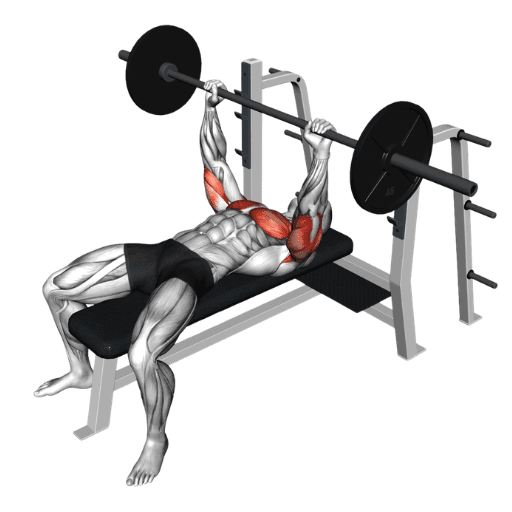
Check your bench press
Adults, 18 and overYour result is a percentile: if it says 60, about 60 out of every 100 lifters in your group lifted less than you. Your group is lifters of your sex who are close to you in age and bodyweight.
Your result appears here
Fill in the form and press “See where I rank”. You get:
- Your place in the group
- A chart of the group
- The weight each level takes
The numbers come from the OpenPowerlifting data, release 14 November 2026. How it was built.
Bench press by bodyweight
Each row is a bodyweight band and each column is a percentile. These tables show what adult competitors of your sex lifted, grouped by bodyweight. Each weight is shown in kilograms and in pounds. The switch above the table chooses which one is large. A percentile is a weight. For example, among men in the 80 to under 90 kg176 to under 198 lb band, the 25th percentile is 115 kg254 lb: at least 25 out of every 100 of those men lifted 115 kg254 lb or less. The 50th percentile is the median.
- Men
- Lowest median92.5 kg 204 lbin the under 60 kg bandin the under 132 lb bandHighest median180 kg 397 lbin the 150 kg and over bandin the 331 lb and over band
- Women
- Lowest median47.5 kg 105 lbin the under 50 kg bandin the under 110 lb bandHighest median77.5 kg 171 lbin the 120 kg and over bandin the 265 lb and over band
| Bodyweight | Lifters | 5th | 10th | 25th | 50thMedian | 75th | 90th | 95th | 99th |
|---|---|---|---|---|---|---|---|---|---|
| under 60 kg under 132 lb | 11,185 | 55 kg 121 lb | 65 kg 143 lb | 77.5 kg 171 lb | 92.5 kg 204 lb | 110 kg 243 lb | 125 kg 276 lb | 135 kg 298 lb | 167.5 kg 369 lb |
| 60 to under 70 kg 132 to under 154 lb | 31,136 | 70 kg 154 lb | 77.5 kg 171 lb | 90 kg 198 lb | 105 kg 231 lb | 120 kg 265 lb | 135 kg 298 lb | 145 kg 320 lb | 165 kg 364 lb |
| 70 to under 80 kg 154 to under 176 lb | 72,526 | 80 kg 176 lb | 90 kg 198 lb | 102.5 kg 226 lb | 117.5 kg 259 lb | 132.5 kg 292 lb | 147.5 kg 325 lb | 157.5 kg 347 lb | 177.5 kg 391 lb |
| 80 to under 90 kg 176 to under 198 lb | 110,870 | 90 kg 198 lb | 100 kg 220 lb | 115 kg 254 lb | 130 kg 287 lb | 150 kg 331 lb | 165 kg 364 lb | 175 kg 386 lb | 197.5 kg 435 lb |
| 90 to under 100 kg 198 to under 220 lb | 84,439 | 97.5 kg 215 lb | 107.5 kg 237 lb | 125 kg 276 lb | 142.5 kg 314 lb | 160 kg 353 lb | 180 kg 397 lb | 190 kg 419 lb | 215 kg 474 lb |
| 100 to under 110 kg 220 to under 243 lb | 59,202 | 102.5 kg 226 lb | 115 kg 254 lb | 132.5 kg 292 lb | 152.5 kg 336 lb | 175 kg 386 lb | 192.5 kg 424 lb | 205 kg 452 lb | 227.5 kg 502 lb |
| 110 to under 120 kg 243 to under 265 lb | 29,868 | 105 kg 231 lb | 117.5 kg 259 lb | 137.5 kg 303 lb | 160 kg 353 lb | 182.5 kg 402 lb | 205 kg 452 lb | 215 kg 474 lb | 240 kg 529 lb |
| 120 to under 130 kg 265 to under 287 lb | 19,920 | 110 kg 243 lb | 120 kg 265 lb | 142.5 kg 314 lb | 167.5 kg 369 lb | 190 kg 419 lb | 212.5 kg 468 lb | 227.5 kg 502 lb | 250 kg 551 lb |
| 130 to under 140 kg 287 to under 309 lb | 10,286 | 110 kg 243 lb | 122.5 kg 270 lb | 145 kg 320 lb | 170 kg 375 lb | 197.5 kg 435 lb | 220 kg 485 lb | 232.5 kg 513 lb | 260 kg 573 lb |
| 140 to under 150 kg 309 to under 331 lb | 5,353 | 107.5 kg 237 lb | 122.5 kg 270 lb | 147.5 kg 325 lb | 175 kg 386 lb | 200 kg 441 lb | 227.5 kg 502 lb | 240 kg 529 lb | 265 kg 584 lb |
| 150 kg and over 331 lb and over | 4,534 | 110 kg 243 lb | 125 kg 276 lb | 150 kg 331 lb | 180 kg 397 lb | 210 kg 463 lb | 235 kg 518 lb | 247.5 kg 546 lb | 275 kg 606 lb |
| Bodyweight | Lifters | 5th | 10th | 25th | 50thMedian | 75th | 90th | 95th | 99th |
|---|---|---|---|---|---|---|---|---|---|
| under 50 kg under 110 lb | 7,727 | 30 kg 66 lb | 35 kg 77 lb | 40 kg 88 lb | 47.5 kg 105 lb | 57.5 kg 127 lb | 67.5 kg 149 lb | 75 kg 165 lb | 95 kg 209 lb |
| 50 to under 60 kg 110 to under 132 lb | 39,258 | 35 kg 77 lb | 40 kg 88 lb | 47.5 kg 105 lb | 55 kg 121 lb | 65 kg 143 lb | 75 kg 165 lb | 82.5 kg 182 lb | 100 kg 220 lb |
| 60 to under 70 kg 132 to under 154 lb | 46,290 | 40 kg 88 lb | 45 kg 99 lb | 52.5 kg 116 lb | 60 kg 132 lb | 72.5 kg 160 lb | 85 kg 187 lb | 92.5 kg 204 lb | 110 kg 243 lb |
| 70 to under 80 kg 154 to under 176 lb | 32,492 | 42.5 kg 94 lb | 45 kg 99 lb | 55 kg 121 lb | 65 kg 143 lb | 77.5 kg 171 lb | 90 kg 198 lb | 100 kg 220 lb | 120 kg 265 lb |
| 80 to under 90 kg 176 to under 198 lb | 20,041 | 42.5 kg 94 lb | 47.5 kg 105 lb | 55 kg 121 lb | 67.5 kg 149 lb | 80 kg 176 lb | 95 kg 209 lb | 105 kg 231 lb | 127.5 kg 281 lb |
| 90 to under 100 kg 198 to under 220 lb | 9,027 | 45 kg 99 lb | 50 kg 110 lb | 57.5 kg 127 lb | 67.5 kg 149 lb | 80 kg 176 lb | 95 kg 209 lb | 105 kg 231 lb | 127.5 kg 281 lb |
| 100 to under 110 kg 220 to under 243 lb | 5,636 | 47.5 kg 105 lb | 50 kg 110 lb | 60 kg 132 lb | 70 kg 154 lb | 85 kg 187 lb | 97.5 kg 215 lb | 107.5 kg 237 lb | 130 kg 287 lb |
| 110 to under 120 kg 243 to under 265 lb | 3,293 | 47.5 kg 105 lb | 52.5 kg 116 lb | 62.5 kg 138 lb | 72.5 kg 160 lb | 87.5 kg 193 lb | 102.5 kg 226 lb | 112.5 kg 248 lb | 135 kg 298 lb |
| 120 kg and over 265 lb and over | 2,923 | 50 kg 110 lb | 55 kg 121 lb | 65 kg 143 lb | 77.5 kg 171 lb | 92.5 kg 204 lb | 110 kg 243 lb | 120 kg 265 lb | 145 kg 320 lb |
Bench press by age
Here the same lifters are grouped by age. Each age band mixes all bodyweights, so these tables show how the numbers change with age. They are not the best way to judge your own lift. The checker above does that, because it uses your age and your bodyweight together.
- Men
- Lowest median92.5 kg 204 lbat ages 70 and overat ages 70 and overHighest median150 kg 331 lbat ages 35 to 39at ages 35 to 39
- Women
- Lowest median40 kg 88 lbat ages 70 and overat ages 70 and overHighest median65 kg 143 lbat ages 30 to 34at ages 30 to 34
| Age | Lifters | 5th | 10th | 25th | 50thMedian | 75th | 90th | 95th | 99th |
|---|---|---|---|---|---|---|---|---|---|
| 18 to 24 | 148,914 | 82.5 kg 182 lb | 92.5 kg 204 lb | 107.5 kg 237 lb | 127.5 kg 281 lb | 147.5 kg 325 lb | 167.5 kg 369 lb | 182.5 kg 402 lb | 207.5 kg 457 lb |
| 25 to 29 | 79,344 | 95 kg 209 lb | 105 kg 231 lb | 120 kg 265 lb | 140 kg 309 lb | 165 kg 364 lb | 187.5 kg 413 lb | 200 kg 441 lb | 230 kg 507 lb |
| 30 to 34 | 54,563 | 95 kg 209 lb | 105 kg 231 lb | 125 kg 276 lb | 147.5 kg 325 lb | 170 kg 375 lb | 195 kg 430 lb | 210 kg 463 lb | 240 kg 529 lb |
| 35 to 39 | 34,092 | 95 kg 209 lb | 105 kg 231 lb | 125 kg 276 lb | 150 kg 331 lb | 175 kg 386 lb | 200 kg 441 lb | 215 kg 474 lb | 242.5 kg 535 lb |
| 40 to 44 | 25,560 | 92.5 kg 204 lb | 105 kg 231 lb | 125 kg 276 lb | 147.5 kg 325 lb | 172.5 kg 380 lb | 195 kg 430 lb | 210 kg 463 lb | 237.5 kg 524 lb |
| 45 to 49 | 16,812 | 90 kg 198 lb | 100 kg 220 lb | 120 kg 265 lb | 142.5 kg 314 lb | 167.5 kg 369 lb | 190 kg 419 lb | 205 kg 452 lb | 232.5 kg 513 lb |
| 50 to 54 | 12,845 | 85 kg 187 lb | 95 kg 209 lb | 115 kg 254 lb | 135 kg 298 lb | 160 kg 353 lb | 182.5 kg 402 lb | 195 kg 430 lb | 222.5 kg 491 lb |
| 55 to 59 | 8,484 | 80 kg 176 lb | 90 kg 198 lb | 105 kg 231 lb | 127.5 kg 281 lb | 150 kg 331 lb | 170 kg 375 lb | 185 kg 408 lb | 210 kg 463 lb |
| 60 to 64 | 6,519 | 70 kg 154 lb | 80 kg 176 lb | 97.5 kg 215 lb | 117.5 kg 259 lb | 140 kg 309 lb | 157.5 kg 347 lb | 170 kg 375 lb | 195 kg 430 lb |
| 65 to 69 | 4,035 | 62.5 kg 138 lb | 72.5 kg 160 lb | 87.5 kg 193 lb | 107.5 kg 237 lb | 127.5 kg 281 lb | 145 kg 320 lb | 155 kg 342 lb | 182.5 kg 402 lb |
| 70 and over | 3,547 | 52.5 kg 116 lb | 60 kg 132 lb | 75 kg 165 lb | 92.5 kg 204 lb | 110 kg 243 lb | 130 kg 287 lb | 140 kg 309 lb | 162.5 kg 358 lb |
| Age | Lifters | 5th | 10th | 25th | 50thMedian | 75th | 90th | 95th | 99th |
|---|---|---|---|---|---|---|---|---|---|
| 18 to 24 | 48,517 | 37.5 kg 83 lb | 42.5 kg 94 lb | 50 kg 110 lb | 60 kg 132 lb | 72.5 kg 160 lb | 85 kg 187 lb | 92.5 kg 204 lb | 110 kg 243 lb |
| 25 to 29 | 32,708 | 40 kg 88 lb | 45 kg 99 lb | 52.5 kg 116 lb | 62.5 kg 138 lb | 75 kg 165 lb | 90 kg 198 lb | 100 kg 220 lb | 120 kg 265 lb |
| 30 to 34 | 23,741 | 40 kg 88 lb | 45 kg 99 lb | 52.5 kg 116 lb | 65 kg 143 lb | 77.5 kg 171 lb | 90 kg 198 lb | 102.5 kg 226 lb | 125 kg 276 lb |
| 35 to 39 | 16,373 | 40 kg 88 lb | 45 kg 99 lb | 52.5 kg 116 lb | 62.5 kg 138 lb | 75 kg 165 lb | 92.5 kg 204 lb | 102.5 kg 226 lb | 125 kg 276 lb |
| 40 to 44 | 12,308 | 40 kg 88 lb | 45 kg 99 lb | 52.5 kg 116 lb | 62.5 kg 138 lb | 75 kg 165 lb | 90 kg 198 lb | 100 kg 220 lb | 125 kg 276 lb |
| 45 to 49 | 8,106 | 40 kg 88 lb | 42.5 kg 94 lb | 50 kg 110 lb | 60 kg 132 lb | 72.5 kg 160 lb | 87.5 kg 193 lb | 100 kg 220 lb | 122.5 kg 270 lb |
| 50 to 54 | 5,604 | 37.5 kg 83 lb | 40 kg 88 lb | 47.5 kg 105 lb | 57.5 kg 127 lb | 70 kg 154 lb | 85 kg 187 lb | 95 kg 209 lb | 120 kg 265 lb |
| 55 to 59 | 3,225 | 35 kg 77 lb | 37.5 kg 83 lb | 45 kg 99 lb | 55 kg 121 lb | 65 kg 143 lb | 80 kg 176 lb | 90 kg 198 lb | 112.5 kg 248 lb |
| 60 to 64 | 2,185 | 32.5 kg 72 lb | 35 kg 77 lb | 40 kg 88 lb | 50 kg 110 lb | 60 kg 132 lb | 72.5 kg 160 lb | 80 kg 176 lb | 100 kg 220 lb |
| 65 to 69 | 1,182 | 30 kg 66 lb | 32.5 kg 72 lb | 37.5 kg 83 lb | 45 kg 99 lb | 55 kg 121 lb | 65 kg 143 lb | 75 kg 165 lb | 95 kg 209 lb |
| 70 and over | 795 | 25 kg 55 lb | 30 kg 66 lb | 35 kg 77 lb | 40 kg 88 lb | 47.5 kg 105 lb | 57.5 kg 127 lb | 65 kg 143 lb | not shown: the group is too small for this percentile |
Where round weights land
Weights on the bar are easier to picture than percentiles. These tables show where six round weights rank in each bodyweight band, for all adult ages. Each number is how many out of every 100 lifters in the band lifted less than that weight. A lifter who lifted exactly that weight counts as half.
The columns are round weights in kilograms, 60 to 160 kg. Switch to pounds and they change to 135 to 405 lb.The columns are round weights in pounds, 135 to 405 lb. Switch to kilograms and they change to 60 to 160 kg. We chose these round numbers ourselves. They are not a statistic, and the kilogram set is not the pound set converted.
Example: 100 kg is about 220 lb. Among men in the 80 to under 90 kg band, about 10 out of every 100 lifted less than that.Example: 225 lb is 102.06 kg. Among men in the 176 to under 198 lb band, about 12 out of every 100 lifted less than that.
We count lifts in steps of 2.5 kg (about 5.5 lb). A weight in pounds is first changed to kilograms, then placed in the nearest step. The round weights in kilograms sit exactly on a step.
| Bodyweight | Lifters | 135 lb61.23 kg | 185 lb83.91 kg | 225 lb102.06 kg | 275 lb124.74 kg | 315 lb142.88 kg | 405 lb183.7 kg | 60 kg132 lb | 80 kg176 lb | 100 kg220 lb | 120 kg265 lb | 140 kg309 lb | 160 kg353 lb |
|---|---|---|---|---|---|---|---|---|---|---|---|---|---|
| under 60 kg under 132 lb | 11,185 | 7 | 36 | 66 | 90 | over 95 | over 99 | 7 | 28 | 61 | 87 | over 95 | over 95 |
| 60 to under 70 kg 132 to under 154 lb | 31,136 | under 5 | 17 | 44 | 81 | 94 | over 99 | under 5 | 12 | 39 | 74 | 93 | over 95 |
| 70 to under 80 kg 154 to under 176 lb | 72,526 | under 5 | 7 | 24 | 62 | 85 | over 99 | under 5 | under 5 | 21 | 54 | 83 | over 95 |
| 80 to under 90 kg 176 to under 198 lb | 110,870 | under 5 | under 5 | 12 | 40 | 67 | over 95 | under 5 | under 5 | 10 | 32 | 63 | 87 |
| 90 to under 100 kg 198 to under 220 lb | 84,439 | under 5 | under 5 | 7 | 26 | 50 | 91 | under 5 | under 5 | 6 | 21 | 46 | 73 |
| 100 to under 110 kg 220 to under 243 lb | 59,202 | under 5 | under 5 | under 5 | 18 | 37 | 83 | under 5 | under 5 | under 5 | 14 | 33 | 59 |
| 110 to under 120 kg 243 to under 265 lb | 29,868 | under 5 | under 5 | under 5 | 15 | 30 | 74 | under 5 | under 5 | under 5 | 11 | 27 | 50 |
| 120 to under 130 kg 265 to under 287 lb | 19,920 | under 5 | under 5 | under 5 | 12 | 25 | 67 | under 5 | under 5 | under 5 | 10 | 22 | 42 |
| 130 to under 140 kg 287 to under 309 lb | 10,286 | under 5 | under 5 | under 5 | 11 | 23 | 61 | under 5 | under 5 | under 5 | 9 | 20 | 38 |
| 140 to under 150 kg 309 to under 331 lb | 5,353 | under 5 | under 5 | under 5 | 11 | 21 | 57 | under 5 | under 5 | under 5 | 9 | 19 | 35 |
| 150 kg and over 331 lb and over | 4,534 | under 5 | under 5 | under 5 | 10 | 19 | 52 | under 5 | under 5 | under 5 | 8 | 18 | 33 |
| Bodyweight | Lifters | 135 lb61.23 kg | 185 lb83.91 kg | 225 lb102.06 kg | 275 lb124.74 kg | 315 lb142.88 kg | 405 lb183.7 kg | 60 kg132 lb | 80 kg176 lb | 100 kg220 lb | 120 kg265 lb | 140 kg309 lb | 160 kg353 lb |
|---|---|---|---|---|---|---|---|---|---|---|---|---|---|
| under 50 kg under 110 lb | 7,727 | 80 | over 95 | over 99 | over 99 | over 99 | over 99 | 80 | over 95 | over 99 | over 99 | over 99 | over 99 |
| 50 to under 60 kg 110 to under 132 lb | 39,258 | 63 | over 95 | over 99 | over 99 | over 99 | over 99 | 63 | 93 | over 99 | over 99 | over 99 | over 99 |
| 60 to under 70 kg 132 to under 154 lb | 46,290 | 47 | 91 | over 95 | over 99 | over 99 | over 99 | 47 | 86 | over 95 | over 99 | over 99 | over 99 |
| 70 to under 80 kg 154 to under 176 lb | 32,492 | 39 | 86 | over 95 | over 99 | over 99 | over 99 | 39 | 80 | 95 | over 95 | over 99 | over 99 |
| 80 to under 90 kg 176 to under 198 lb | 20,041 | 34 | 82 | 94 | over 95 | over 99 | over 99 | 34 | 75 | 93 | over 95 | over 99 | over 99 |
| 90 to under 100 kg 198 to under 220 lb | 9,027 | 31 | 81 | 94 | over 95 | over 99 | over 99 | 31 | 74 | 93 | over 95 | over 99 | over 99 |
| 100 to under 110 kg 220 to under 243 lb | 5,636 | 25 | 76 | 93 | over 95 | over 99 | over 99 | 25 | 68 | 91 | over 95 | over 99 | over 99 |
| 110 to under 120 kg 243 to under 265 lb | 3,293 | 21 | 71 | 90 | over 95 | over 99 | over 99 | 21 | 63 | 89 | over 95 | over 99 | over 99 |
| 120 kg and over 265 lb and over | 2,923 | 16 | 62 | 85 | over 95 | over 95 | over 99 | 16 | 53 | 82 | over 95 | over 95 | over 99 |
Who is in these numbers, and who is not
The comparison group is 451,822 adult lifters (1,512,440 meet entries) from public powerlifting results. That is a useful picture of competitors. It is not a picture of everyone who lifts.
Competitors only
People who enter a meet chose to test their lifts in public. They are not a random sample of gym-goers.
Best lift, once per lifter
Each lifter counts once in a group, with the best bench they have on record there. That can be from years ago.
Judged benches
A competition bench is judged. Under the International Powerlifting Federation's rules, the lifter lowers the bar to the chest or abdominal area and holds it motionless until the referee says “Press” (the rule). A bench in your gym may not match that, so the comparison can be off in either direction.
Raw and Wraps categories, sanctioned meets, men and women
The equipped categories (single-ply, multi-ply and unlimited) are left out, and so are unsanctioned meets. Federations have different rules and we did not split by federation.
Adults only
Anyone under 18 is left out, and so is anyone whose age cannot be confirmed as 18 or over.
The full list, with the numbers behind each point, is on the Methodology page.
Is my number good?
We do not use labels such as beginner, weak or elite. A label would hide the group, the age and the bodyweight that give a number its meaning. A percentile says one thing: how many competitors in your group lifted less than you. Those competitors entered a meet. They are not everyone who lifts, so read your result with the limits above in mind.
Compare like with like
Sex, age and bodyweight each change the group. The same bench can rank very differently in two groups, so use the checker for your own numbers and treat the tables as background.
Compare with your own past lifts
If your aim is to get stronger, your own earlier lifts, done the same way, are a fairer comparison than any table. This page cannot tell you how to train. For that, talk to a qualified coach.
Questions people ask
What does my percentile mean?
It is a head count. If the result says 60, about 60 out of every 100 lifters in your group lifted less than you. Lifters who lifted exactly what you did count as half.
A group is only the lifters who happen to be in the data, so the result comes with a likely range. Bigger groups give a narrower range. The methodology page shows the arithmetic with a worked example.
What if I do not know my one-rep max?
Use the helper under the bench box in the checker. Open “Do not know your one-rep max? Estimate it”. Enter the weight and the number of reps of a hard set you have already done, of 10 reps or fewer. It gives an estimate, and you choose whether to use it.
The estimate is not a lift you did. It comes from one published formula (Brzycki, 1993), and the result says it is an estimate. That article gives no figure for how close the formula is. In the one study we found that measured it (LeSuer and others, 1997), the formula came out on average 4% below the bench maxes that the study measured, in untrained students. The methodology page has the formula, a worked example and the limits.
Please do not test a true one-rep max only to fill in the box. If you ever do, have spotters, and read the safety note.
Is a 100 kg bench press good?Is a 225 lb bench press good?
That depends on who you compare with, so we show the same lift in two groups. Take 100 kg (about 220 lb). Among men in the 80 to under 90 kg band, about 10 out of every 100 lifted less. Among women in the 60 to under 70 kg band, more than 95 out of every 100 lifted less. Each is the biggest bodyweight band for its sex.That depends on who you compare with, so we show the same lift in two groups. Take 225 lb (102.1 kg). Among men in the 176 to under 198 lb band, about 12 out of every 100 lifted less. Among women in the 132 to under 154 lb band, more than 95 out of every 100 lifted less. Each is the biggest bodyweight band for its sex.
The same weight ranks very differently in other bands. Find your band in the table of round weights, or enter your own numbers in the checker.
What is the average bench press for men and for women?
There is no single average, because bodyweight matters a lot. We show the median instead: the weight that half of a group lifted or less, which is the 50th percentile. Among men, the median goes from 92.5 kg in the under 60 kg band to 180 kg in the 150 kg and over band. Among women, the median goes from 47.5 kg in the under 50 kg band to 77.5 kg in the 120 kg and over band.Among men, the median goes from 204 lb in the under 132 lb band to 397 lb in the 331 lb and over band. Among women, the median goes from 105 lb in the under 110 lb band to 171 lb in the 265 lb and over band.
Find your band in the bodyweight tables, or let the checker pick it for you. These are competitors, not everyone who lifts, so the numbers say nothing about the general public.
Why do other sites show different numbers?
Different sites make different choices, so their numbers can differ. A site might count equipped lifters or only raw lifters, drug-tested categories or all categories, all ages or only adults, and it might group lifters by different bodyweight bands.
Our choices are written down on the Methodology page, so you can compare them with any other source.
What do Raw and Wraps mean?
These are equipment categories in the OpenPowerlifting data. Raw means bare knees or knee sleeves. Wraps means knee wraps were allowed. The equipped categories (single-ply, multi-ply and unlimited) are for suits and other supportive gear, and we leave them out.
OpenPowerlifting's own documentation warns that a category “does not mean that the lifter was actually wearing that equipment”. In the bodyweight band we compared for each sex, Raw and Wraps were never more than 2.5 kg (about 5.5 lb)about 5.5 lb (2.5 kg) apart at any percentile we looked at, so we count them together. The methodology page shows that check.
For the squat we chose differently. The squat standards page opens on Raw only, and it shows how far apart Raw and Wraps are for the squat.
How often is this updated, and can I download the data?
This page uses the OpenPowerlifting release of 14 November 2026. We plan to look for a new release about every three months. Each update gets a dated line in the changes list.
The group files the checker uses are public. They hold counts of lifters at each weight, and no names. The download section of the Methodology page lists them, with the licence.
Where the numbers come from
The tables and the checker on this page are built from the results file published by OpenPowerlifting (opens in a new tab), release of 14 November 2026.
- Source
- OpenPowerlifting
- The public results file
- Release used
- 14 November 2026
- The version behind the tables and the checker
- Meet entries
- 1,512,440
- After our filters
- Adult lifters
- 451,822
- After our filters
No outside reviewer has looked at this work. The Methodology page has every step, with the limits and the checks. Manish Kumar is responsible for this page (who made this).
Resources and references
The data and the sport
Data
OpenPowerlifting results file, release of 14 November 2026 (opens in a new tab)
OpenPowerlifting. Licence: Public domain. The LICENSE.txt in the download says the data is contributed to the public domain and that attribution is welcome but not required.
Every lifter count, percentile and likely range in the tables, the cards and the checker is worked out from this file.
Documentation
OpenPowerlifting bulk CSV: column documentation (opens in a new tab)
OpenPowerlifting
What “Raw”, “Wraps”, “Tested” and “Sanctioned” mean in the data. It also warns that a category does not always match the gear a lifter wore. The answer on Raw and Wraps quotes it.
Rulebook
IPF Technical Rules 2026 (effective 1 March 2026, version 3) (opens in a new tab)
International Powerlifting Federation
In a judged bench press under these rules, the lifter lowers the bar to the chest or abdominal area and holds it motionless until the Chief Referee gives the command “Press”. Other federations have their own rules, and we did not split the data by federation.
Percentiles and likely ranges
Documentation
R documentation: Sample Quantiles (quantile) (opens in a new tab)
The R Project for Statistical Computing
States the percentile definition we use, “type 1”, as the “Inverse of empirical distribution function”. With it, every percentile in a table is a weight that a real lifter in that group lifted.
Journal article
Sample Quantiles in Statistical Packages (opens in a new tab)
Rob J. Hyndman and Yanan Fan, The American Statistician 50(4), 361 to 365, 1996
DOI: 10.1080/00031305.1996.10473566 (opens in a new tab)
R's documentation lists nine ways to work out a percentile and names this paper as the one that discusses them. The documentation also says the paper recommended a different one, type 8. We use type 1 on purpose, because it never gives an in-between weight.
Journal article
Interval Estimation for a Binomial Proportion (opens in a new tab)
Lawrence D. Brown, T. Tony Cai and Anirban DasGupta, Statistical Science 16(2), 101 to 133, 2001
DOI: 10.1214/ss/1009213286 (opens in a new tab)
Compares ways to give a range for a proportion. Its abstract recommends the Wilson or Jeffreys interval for small groups and the Agresti and Coull interval for larger ones. We use the Wilson interval for the likely range in your result, at every group size.
Pounds and the one-rep max helper
Standard
NIST Handbook 44 (2026), Appendix B: Units and Systems of Measurement (opens in a new tab)
National Institute of Standards and Technology
Defines the avoirdupois pound as exactly 0.45359237 kilogram. Every pound and kilogram figure on this page uses that factor.
Journal article
Strength Testing: Predicting a One-Rep Max from Reps-to-Fatigue (opens in a new tab)
Matt Brzycki, Journal of Physical Education, Recreation & Dance 64(1), 88 to 90, January 1993
DOI: 10.1080/07303084.1993.10606684 (opens in a new tab)
The formula behind the one-rep max helper in the checker. Its table covers 1 to 10 reps, and so does the helper. The article gives no figure for how close the formula comes.
Journal article
Dale A. LeSuer, James H. McCormick, Jerry L. Mayhew, Ronald L. Wasserstein and Michael D. Arnold, Journal of Strength and Conditioning Research 11(4), 211 to 213, November 1997
DOI: 10.1519/00124278-199711000-00001 (opens in a new tab)
The one study we found that measured how close the formula comes. In 67 untrained college students, its bench press estimates came out on average 4% below their measured one-rep maxes.
Safety
Guidelines
NSCA Strength and Conditioning Professional Standards and Guidelines (opens in a new tab)
National Strength and Conditioning Association, Strength & Conditioning Journal 39(6), 1 to 24, December 2017
DOI: 10.1519/ssc.0000000000000348 (opens in a new tab)
Standard 3.2 says that, together with safety equipment such as a power rack, attentive spotting must be provided when free weights are supported on the trunk or moved over the head or face. The safety section quotes it.
Guidelines
Australian Institute of Sport
Section 5.1, Bench Press, recommends two experienced spotters, especially during maximal efforts. The safety section quotes it.
Found a mistake, or a link that does not work? Write to [email protected]. When we confirm an error, we fix it and add a dated line to the changes list.
Last updated: